

Iced matcha looks like the easiest drink on the internet. Powder, water, ice, done. Then you actually make it and end up with a clumpy glass that tastes bitter and separates before you’re halfway through.
The fix isn’t fancy gear. It’s water temperature, whisk motion, and knowing when milk actually helps versus when it just waters everything down. Once those click, iced matcha at home beats most cafe cups, and it takes five minutes.
This guide walks you through everything on how to make iced matcha. The method we use. The mistakes that wreck most first attempts. And the health questions people ask before making it a daily habit.
Key Takeaways
- Matcha never dissolves in cold-water alone
- It always needs a short hot-water whisk first
- Sift before you whisk, or clumps survive no matter how hard you go at it
- Ceremonial grade is for drinking straight
- Culinary grade is for baking and strong mix-ins
- 1-2 cups a day is fine for most healthy adults
- Matcha and coffee both deliver caffeine
- Matcha just lands more gently
What Is Iced Matcha?
It is matcha green tea powder whisked with a little hot water and then poured cold over ice: with or without milk. It’s not the same as steeping a green tea bag and chilling it. Matcha uses the whole tea leaf ground into powder. Thus, you’re drinking the leaf itself, not just what a bag releases into water.
This is also one of the reasons why matcha needs a proper whisk, not just a quick stir.
How to Make Iced Matcha at Home
Whisk 1-2 tsp of matcha into 2-3 tbsp of hot, not boiling, water until smooth, then pour it over ice and milk or cold water:
You need:
- 1-2 tsp matcha powder: ceremonial grade for drinking
- 2-3 tbsp hot water
- 1 cup ice
- 4-6 oz cold milk or water
- Sweetener to taste, optional
How to make it:
- First, sift the matcha into a bowl. This breaks up the clumps before any liquid touches it
- Then, pour in the hot water and whisk briskly in a zig-zag “W” motion for about 20 seconds, until smooth and a little foamy
- Fill a glass with ice
- Pour in cold milk or water
- Add the whisked matcha on top and stir once
Just for drinks, we have a small tin of ceremonial-grade matcha and a separate culinary tin for baking. The drinking tin gets used within three weeks, and when the color fades, the taste goes flat.
Ceremonial vs Culinary Grade: Which One for Iced Drinks?
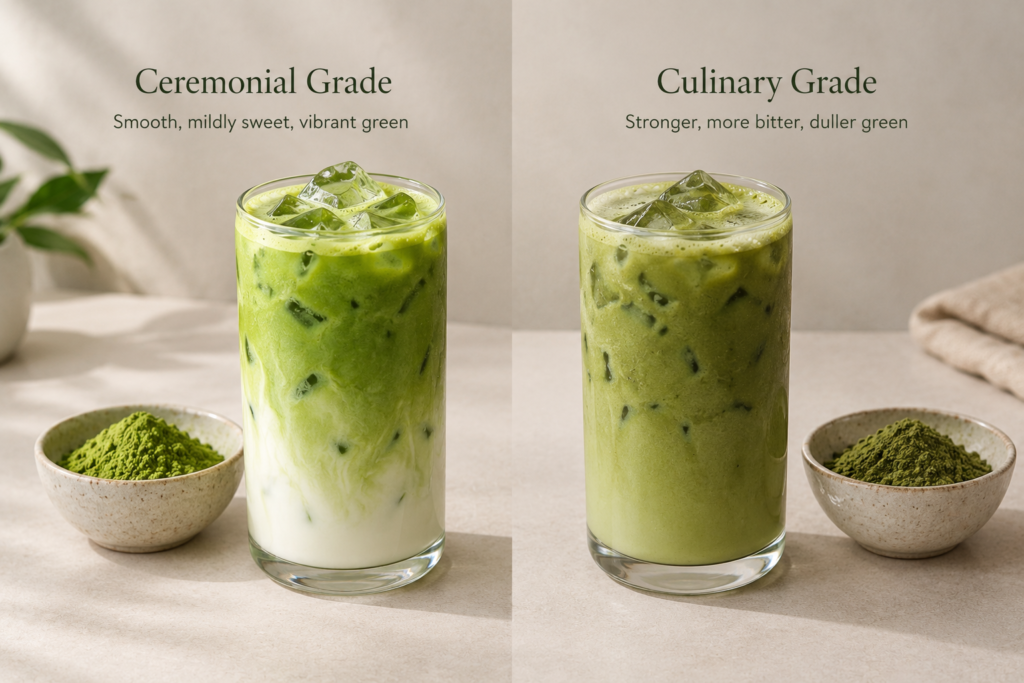
Ceremonial grade for plain iced matcha. Culinary grade only if you’re layering in strong flavors like espresso or syrup that can cover up the bitterness:
| Grade | Taste | Best For |
|---|---|---|
| Ceremonial | Smooth, mildly sweet, vibrant green | Iced matcha, lattes |
| Culinary | Stronger, more bitter, duller green | Baking, dirty matcha, heavily flavored drinks |
Multiple Ways to Drink Matcha
Plain iced matcha is just the starting point:
- A Matcha Lavender Latte softens it with floral syrup and milk
- Dirty Matcha Latte adds a shot of espresso for something closer to coffee
- Hojicha Latte swaps in roasted green tea for a nuttier cup
All three use the same sift-and-whisk base as the recipe above.
Common Mistakes When Making Matcha
Most bad matcha comes down to five habits, all fixable:
- Boiling the water. Past 175°F, it scorches the leaf and pulls out sharp bitterness. Let boiled water sit for two to three minutes first
- Skipping the sift. Matcha clumps in the tin, and no amount of whisking fully breaks that up once it hits liquid
- Stirring instead of whisking. A spoon just pushes powder around the glass. A zig-zag whisk motion is what actually suspends it
- Buying culinary grade to drink plain. It’s cheaper for a reason, and you’ll taste that reason
- Adding cold water straight to dry powder. It needs that first hot water contact to bloom before it can dissolve properly
Is Iced Matcha Healthy for You?
Yes. It’s healthy but in reasonable amounts. Matcha is rich in catechins, mainly EGCG, an antioxidant that reduces inflammation and protects cells.
The watch-outs are just as real:
- Matcha’s catechins can reduce iron absorption
- It’s worth spacing it out from iron-rich meals
1-2 cups a day is what most nutrition sources land on for healthy adults. Also, pregnant women should check with a doctor first.
Is Matcha Healthier Than Coffee?
Both are fine in moderation, and if coffee makes you jittery, matcha is worth trying instead. If you need a hard jolt before 7am, coffee still wins on raw strength:
| Matcha | Coffee | |
|---|---|---|
| 1 cup Caffeine | ~70 mg | ~95 mg |
| Energy curve | Gradual | Faster spike |
| Best for | Sustained focus | A fast, strong wake-up |
FAQs
Can I just mix matcha with cold water?
Not for a smooth drink. Matcha doesn’t dissolve in cold water rather it needs a short whisk in warm water first. Without warm water, it’ll get super clumpy at the bottom of the glass.
Is it safe to drink matcha every day?
Yes. 1-2 cups a day. Just space it away from iron-rich meals. Because, the catechins can block iron absorption.
How much caffeine is in iced matcha?
Caffeine in matcha is around 70mg per tsp of matcha. Thus, roughly half the caffeine in a cup of coffee.
Is matcha better with milk or water?
It depends on the mood. Water keeps the grassy and umami flavor front and center. Milk mellows it out and adds body.
Can I make iced matcha without a bamboo whisk?
Yes. A handheld milk frother works well, you can also use a jar with a tight lid that you shake hard for ~20 sec.