For those who prefer having a healthy cup of morning coffee and yet something that feels like a treat, this Starbucks Matcha Latte recipe has got your back. It’s smooth and earthy with a hint of sweetness, and the best part? It’s simple to make at home. All you need are a few ingredients and a minute or two to froth. Also, it’s high in health benefits, let’s dig into what makes this green-hued drink so special and how to recreate the same taste in your own kitchen with our healthier, more balanced version of Starbucks matcha latte recipe.
What’s in a Starbucks Matcha Latte?
It can surprise you that the drink is extremely minimal in terms of ingredients. Here’s the classic breakdown:
- Matcha green tea blend
- Milk of your choice
- Hot water for the hot version
- Ice for the iced version
That’s pretty much it.
But here’s the secret sauce. Starbucks opts for matcha powder that includes sugar blended into it. Unlike traditional matcha powders, it dissolves fast in hot or cold milk without clumping.
If you’re making it at home using our Starbucks matcha latte recipe, you can decide on how strong you want your latte. More control means better balance, most of all if you’re opting for a healthier version.
Is a Matcha Latte Healthy?
The answer is: yes, it can be very healthy, especially if made mindfully. Matcha itself is loaded with:
- Antioxidants, that help combat free radicals
- L-theanine, an amino acid that helps you focus
- Caffeine, but in a steadier and balanced form than what you get from coffee
- Chlorophyll, which gives matcha a vibrant color and detox properties
When you buy pure matcha powder that’s without added sugar, you’re basically having finely milled green tea leaves, it means you’re consuming all the nutrients directly, not just soaking them.
But there’s a problem: Starbucks doesn’t use pure matcha powder. The version that they use already has sugar added to it. For every 16 oz serving of matcha latte at Starbucks, they use 3 scoops of matcha powder, and that makes up to about 24g of sugar, just from the powder, not counting any other sweeteners.
While a matcha latte can be very healthy, it all eventually depends to how you make it. Luckily, when you make it at home using our modified Starbucks matcha latte recipe, you get to skip the sugar bomb and still keep the glow.
Starbucks Matcha Latte Calories (And How Our Recipe Has Fewer Calories)
Let’s dive in, step by step:
For a Grande 16 oz Starbucks Matcha Latte made with 2% milk, what you’re getting is:
- Calories: ~240
- Fat: 7g
- Carbohydrates: 34g
- Sugar: ~32g
- Protein: 12g
That sugar number? It’s clearly high, and a big chunk of it comes from the matcha blend itself.
Now let’s compare it with a homemade version of Starbucks matcha latte recipe using unsweetened matcha and a low-calorie milk like almond or oat milk (unsweetened):
- Calories: ~80–100 (depending on your milk)
- Fat: 2–4g
- Carbohydrates: 5–8g
- Sugar: <1g (unless you sweeten it yourself)
- Protein: 1–3g
That’s more than a 50% drop in calories and sugar with our Starbucks matcha latte recipe. If you want to keep your morning drink light while still enjoying that earthy-sweet matcha flavor, a DIY version is the clear winner. Plus, it adapts beautifully to your taste, want it stronger? Add more matcha. Need a bit of sweetness? A hint of maple syrup or honey will do.
Starbucks Matcha Latte Recipe
Here’s our own version of Starbucks matcha latte recipe adapted for health-freaks, and trust us, this version truly hits the spot.
Ingredients
- 1–2 tsp pure ceremonial-grade or culinary-grade matcha powder
- 2–3 tbsp hot water, but not boiling, about 175°F or 80°C
- 1 cup milk of your choice, we love oat, almond, or coconut milk
- Optional: 1–2 tsp honey or a sugar-free sweetener
- Optional toppings: cinnamon or matcha dust for flair
Instructions
- Whisk matcha gently through a fine sieve into a mug or bowl, this helps avoid clumps and gives you a smoother blend
- Add hot water and whisk thoroughly in a zigzag (W-shaped) motion using a bamboo whisk or small frother. You’re looking for a smooth paste with no lumps
- Heat and froth your milk. You can warm the milk on the stove or microwave and then froth it with a handheld frother or by shaking it in a jar with the lid on, please!
- Pour the milk into your matcha base, watching that green swirl rise up to meet the foam, add your sweetener now if using
- Top with a sprinkle of matcha or cinnamon if you’re feeling fancy. Sip and smile.
Bonus: Iced Matcha Latte Recipe
Ingredients
- Same as above, but skip heating the milk
- Add ½ cup ice cubes
Steps
- First, start by mixing your matcha and hot water (as always)
- Then, fill a glass with ice
- Now pour in that cold milk of your choice, oat, almond, dairy, you name it, slowly over the matcha mixture
- Add your favorite sweetener, maybe a splash of simple syrup or maple syrup if you’re feeling fancy. Give it a good stir until everything’s blended. And that’s it! Done and delicious.
Matcha vs. Coffee: Which Should You Pick?
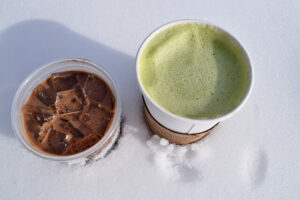
Okay, we get asked this a lot, Is matcha better than coffee?
Well, we love both, but here’s the quick scoop:
- Caffeine: Coffee has more caffeine (90–120mg), while matcha has around 70mg per serving, but it’s released more slowly and doesn’t spike your energy the same way
- Energy crash: Coffee can cause a jolt-and-drop effect. Matcha is smoother, because of L-theanine, which keeps you calm and focused
- Acidity: Matcha is gentler on your stomach
- Flavor: Matcha is grassy, earthy, and a bit sweet, Coffee is rich, bold, and roasted. Totally different moods
If you’re looking for clean energy and a latte that feels luxurious without the crash, matcha wins the morning, especially when you are relying on our modified version of Starbucks matcha latte recipe.
Matcha Latte Vs. Hojicha Latte: Which Green to Go with?
Both hojicha latte and matcha latte are healthful and cozy Japanese green teas. But which one of these I your cup of tea? They vary in their health benefits, caffeine count, and taste profile. Let’s see how they compare:
| Category | Matcha Latte | Hojicha Latte |
| Tea Base | Ground green tea leaves (Matcha) | Roasted green tea leaves (Hojicha) |
| Color | Bright green | Light brown or caramel |
| Flavor Profile | Earthy, grassy, slightly bitter | Nutty, toasty, slightly sweet, and mellow |
| Caffeine Level | Moderate to High (approx. 70 mg per cup) | Low (approx. 7–20 mg per cup) |
| Best Time to Drink | Morning or early afternoon | Evening or late afternoon (low caffeine) |
| Health Benefits | High in antioxidants, boosts metabolism | Gentle on stomach, less astringent |
| Taste Preference | Bold, vibrant flavor lovers | Milder, roasted flavor lovers |
| Ideal For | Energy boost, focus, metabolism support | Relaxation, digestion, caffeine sensitivity |
In short, matcha is an energy booster while hojicha acts more like a relaxant. Matcha is perfect for starting your day, while hojicha is ideal for winding down after a tiring day. You’ll prefer hojicha if you like your tea to feel nutty and roasted, and you’d prefer matcha if you like slightly bitter and robust, earthy tones.
Tips
Here’s what our barista recommends for a perfect Starbucks matcha latte recipe every time:
- Invest in good matcha. Go for ceremonial or high-quality culinary grade, preferably organic, and bright green in color. If it’s yellowish or dull, avoid it
- Don’t burn your matcha. Hot, but not boiling water around 175°F or 80°C keeps the taste smooth, not bitter.
Want to scale down a bit on your caffeine intake? try our healthful Hojicha latte recipe, another Japanese low-caffeine alternative to coffee. Or go for our dirty matcha latte to bring in some goodness in your morning coffee ritual.