

We’ve gone through more mason jars than we’d like to admit testing cold brew coffee recipes in our own kitchen. Some batches came out watery. A couple tasted like dirt because we rushed the steep time. But once we got the ratio right, cold brew became that one coffee we always have in the fridge.
If you’ve ever thought about what really separates cold brew from regular coffee or why our local cafes charge more for this particular coffee, then this guide walks through all of it.
Key Takeaways
- It is steeped in cold water for 12-24 hours with no heat
- Use a coarse grind, similar to raw sugar or sea salt
- Standard ratio is 1:4 for concentrate, 1:8 for ready to drink
- Caffeine runs around 200 mg per 16 oz, depending on the ratio used
- Concentrate keeps in the fridge for up to 2 weeks
- It’s naturally lower in acidity than hot brewed coffee
What Is Cold Brew Coffee?
In cold brew coffee, you steep coarse coffee grounds in cold or room temperature water for 12 to 24 hours, then strain them out. No heat, anywhere in the process. That’s really the whole definition of cold brew coffee.
- Hot water grabs everything fast, oils, acids, bitterness, all of it at once
- Cold water is slower and more selective about what it pulls out
This is the entire reason cold brew tastes the way it does:
- Less bitterness
- Less acid
- A sweetness that shows up without any sugar added
After steeping is done, it can be diluted with water or any milk of your choice. We started making it for summer mornings. Somewhere along the way it just became the everyday coffee, regardless of season.
Cold Brew vs. Iced Coffee: What’s the Difference?
Iced coffee is hot brewed coffee that’s been cooled down, typically poured straight over ice. Cold brew skips heat entirely, start to finish.
These two get confused constantly, understandably. Both are cold, both usually sit over ice in a glass. The similarities stop there.
| Factor | Cold Brew | Iced Coffee |
|---|---|---|
| Brew method | Steeped cold, 12-24 hours | Brewed hot, then chilled |
| Flavor | Smooth, low acidity, naturally sweet | Brighter and more acidic |
| Strength | Usually a concentrate, diluted to taste | Standard strength, no dilution needed |
| Prep time | Long, plan ahead | Quick, ready in minutes |
Need coffee in the next five minutes? Iced coffee wins that one, easily. Got the patience for it and a stomach that doesn’t love acidity? Cold brew’s worth the wait. Our full cold brew vs iced coffee comparison goes deeper if you want it.
How Much Caffeine Is in Cold Brew?
A 16 oz cold brew lands around 200 mg of caffeine, though that number can change based on your ratio and beans. It can beat a same-size drip coffee because cold brew’s normally served as a concentrate with more grounds packed in, not because cold water pulls out more caffeine.
Hot water is actually slightly more efficient at extracting caffeine. Strength here comes down to concentration.
Nitro cold brew muddies this further since the nitrogen makes it feel stronger than it is. We break down the actual numbers in our caffeine in nitro cold brew piece. Short version: nitrogen changes the mouthfeel, not the caffeine count.
Choosing the Right Cold Brew Coffee Grounds
Grind size decides more of your outcome than people expect. Fine grounds are made for speed, pressure, a quick extraction window. None of that applies to a 12 to 24 hour steep.
Leave fine grounds in cold water that long and you’ll get sediment everywhere and a muddy, over-extracted cup. This is exactly the mistake we made the first time around.
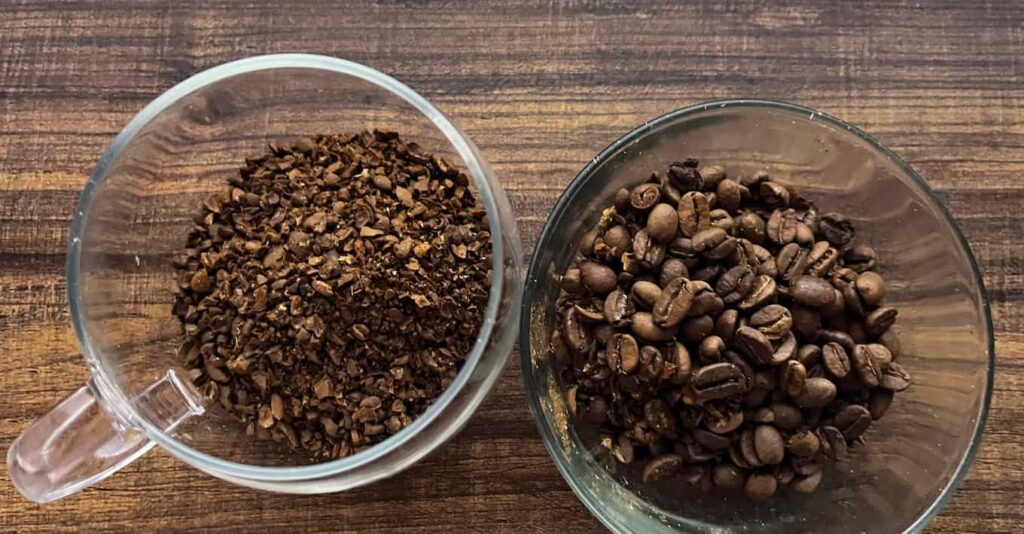
- Go coarse, roughly the texture of raw sugar or kosher salt
- Medium to dark roasts tend to hold up best over a long steep
- Light roasts work fine too, just expect more of the fruitier, brighter side of the bean to show up
Concentrated Cold Brew Coffee: Getting the Ratio Right
The ratio matters more than any other variable in this process. Too much water, it’s thin and forgettable. Too little, and it’s basically undrinkable without dilution.
| Style | Coffee | Water | Use |
|---|---|---|---|
| Concentrate | 1 part | 4 parts | Dilute later with water, milk, or ice |
| Ready to drink | 1 part | 8 parts | Drink straight over ice |
We stick with the concentrated version almost every time. It keeps longer, and it lets you dial each glass up or down depending on how the day’s going.
How to Make Cold Brew Coffee at Home
A jar and a strainer will get you through this. No dedicated equipment required:
- Grind your beans coarse; fine grounds turn bitter and cloudy over a long steep
- Combine grounds and water in your jar at your chosen ratio and stir so nothing stays dry
- After that, cover it and let it sit for 12-24 hours: we start ours before bed and strain in the morning
- Strain twice, once through a mesh strainer for the bulk, once through a paper filter/cheesecloth for the fine sediment
- Refrigerate the concentrate and dilute individual glasses as you go
Sixteen hours tends to be our sweet spot. Push past 24, and the flavor starts flattening out instead of getting bolder.
Common Cold Brew Mistakes
A few things wreck a batch more often than anything else.
- Grinding too fine is the big one, we already confessed to that
- Using warm tap water instead of cold or filtered: it can kickstart bacterial growth during that long steep
- Skipping the second strain leaves you with gritty sediment at the bottom of every glass
- Steeping past 24 hours doesn’t make it stronger, it just makes it flat and a little stale tasting
Equipment Options Beyond a Mason Jar
A jar works fine, but it’s not your only option:
- A French press handles the straining step in one motion; just push the plunger and pour
- Dedicated cold brew makers, like a Toddy system, add a built-in filter so you skip the cheesecloth step entirely
- AeroPress works too, in smaller batches, for anyone who already owns one
None of these change the coffee itself much. They just change how much cleanup you’re signing up for.
Cold Brew Espresso: Is It Actually Espresso?
Cold brew espresso isn’t espresso, technically speaking. Espresso needs pressure and hot water forced through fine grounds in under a minute. Cold brew is the slow yet cold opposite of that.
Cold brew espresso just means a heavily concentrated cold brew. It’s closer to a 1:2 or 1:3 ratio, mimicking the intensity of an espresso shot without being one.
It’s thick and bold and works great in cold brew lattes. Full details, including how to make your own, are in our cold brew espresso guide.
Decaf Cold Brew: You Don’t Have to Skip It
Love the flavor but not the buzz? Decaf cold brew solves that without changing the method at all. You’re just steeping decaffeinated beans instead of regular ones. The flavor holds up better than you’d expect, since decaf beans lose their caffeine before roasting, not during your brew.
We cover the full steps, plus which decaf beans keep their flavor best over a long steep, in our decaf cold brew guide.
How Long Does Cold Brew Last?
Two weeks in the fridge, as a concentrate. That’s one of the better perks of making it yourself. Once you’ve diluted a glass into ready-to-drink form, though, finish it within a day or two.
| Form | Fridge Life |
|---|---|
| Concentrate, undiluted | Up to 2 weeks |
| Diluted, ready to drink | 1 to 2 days |
We keep ours sealed, away from the door of the fridge where temperatures swing the most.
Cold Brew Iced Coffee and Other Ways to Drink It
Dilute the concentrate, pour it over ice, done. That’s cold brew iced coffee in under a minute once your batch is ready, and it’s still our most common way to drink it. A few others worth trying:
- Mix with milk for a cold brew latte, just swap in cold brew concentrate for the espresso
- Blend with banana and a scoop of protein powder for a quick smoothie
- Use it instead of espresso in a coffee cocktail
- Pour it over vanilla ice cream for a lazy affogato
Our actual weekend order is cold brew iced coffee with a splash of oat milk. Nothing fancy about it, but it’s what we keep coming back to.
FAQs
What is cold brew compared to coffee?
Cold brew steeps for hours in cold water rather than brewing it in minutes with hot water. This is why it gets smoother yet less acidic compared to a regular coffee.
What is the 15-15-15 rule for coffee?
A general freshness guideline, not cold brew specific. Use green beans within 15 months of harvest. Roasted beans within 15 days. Ground coffee in 15 minutes of grinding.
How do you describe cold brew coffee?
Smooth, naturally sweet, low in acidity, all thanks to a slow cold steep rather than a fast, hot one.
What’s the right way to make cold brew coffee?
Steep coarse coffee grounds in cold water at a 1:4/1:8 ratio for 12-24 hours, after that, strain them twice and then refrigerate.