

A cappuccino is espresso topped with steamed milk and a thick cap of foam. It’s built in three roughly even layers so no single part takes over the cup. We’ve pulled this drink more mornings than we can count, on a proper machine and on a cheap stovetop setup at home. This guide is everything we wish someone had told us the first time we ordered one.
Key Takeaways
- What Is a Cappuccino? A cappuccino is equal parts espresso, steamed milk, and foam
- Stick to tradition and you’re looking at a 5-6 oz cup, smaller than most people expect
- Caffeine lands anywhere from 63 to 150 mg, mostly coming down to how many shots go in
- Calories usually sit between 70 and 150, and the milk you pick swings that more than the size does
- Compared to a latte, there’s less milk, a much thicker foam cap, and a coffee flavor that actually comes through
What Is a Cappuccino?
A cappuccino is an Italian espresso drink: one part espresso, one part steamed milk, one part milk foam. These three parts are used in roughly equal amounts. The name goes back to the Capuchin friars. Because the brown color of their robes looked similar to the color of coffee mixed with milk..
It came out of Italian espresso bars, back when machines first managed to steam milk under real pressure. By the mid 20th century it had already crossed over into American coffee culture. In Italy, it is mostly enjoyed in the morning and ordering one after a meal is less common.
Espresso, Steamed Milk, and Foam Proportions in a Cappuccino
A traditional cappuccino runs one part espresso, one part steamed milk, and one part foam. This, in a standard 5 to 6 oz cup works out to roughly 1 oz espresso, 2 oz steamed milk, and 2 oz foam:
| Component | Amount (6 oz cup) |
|---|---|
| Espresso | 1 shot ~1 oz |
| Steamed milk | 2 to 2.5 oz |
| Milk foam | 2 to 2.5 oz |
Cafes serving larger cups usually just add a second shot rather than stretching the ratio, which keeps the coffee flavor from getting lost. We tend to go single shot at home and only add a second when we need the extra push.
Wet vs Dry Cappuccino: Which One Are You Actually Drinking?
A wet cappuccino is more steamed milk with just a thin layer of foam. A dry one flips that, mostly foam, barely any liquid milk mixed through.
Order a cappuccino, and you’ll usually land somewhere closer to wet, soft, creamy drink. Ask for it dry and the barista just adds more foam. What you get back is a stronger, more textured sip, with less milk sitting on top of the espresso and dragging it down. Most mornings, we go for wet. But when we actually want the espresso to push through and be noticed, dry is the one we reach for.
Cappuccino vs Latte: What Is the Difference?
A cappuccino has less milk and a much thicker foam cap than a latte, which gives it a bolder coffee flavor and a lighter, airier texture in the mouth.
A latte contains more steamed milk and only a thin layer of foam, making it smoother, creamier, and milder in flavor.
| Feature | Cappuccino | Latte |
| Milk to espresso | About 1:1:1 | About 1:3 |
| Foam depth | 15 to 20 mm | 3 to 5 mm |
| Coffee flavor | Bolder | Milder |
| Cup size | 5 to 6 oz | 8 to 16 oz |
If a latte is milk that happens to have coffee in it, a cappuccino is coffee that happens to have milk in it. That is the whole difference in one line.
Cappuccino vs Macchiato: What Sets Them Apart
A macchiato is espresso with just a small dollop of foam on top. A cappuccino contains a lot more steamed milk with foam:
| Feature | Macchiato | Cappuccino |
|---|---|---|
| Milk added | Just a spoonful of foam | Steamed milk plus a thick foam cap |
| Size of cup | 2-3 oz | 5 oz |
| Coffee flavor | Sharp yet concentrated | Softer and more balanced |
| Best for | Espresso lovers who want a touch of milk | Anyone easing off straight espresso |
Cappuccino Flavor Variations
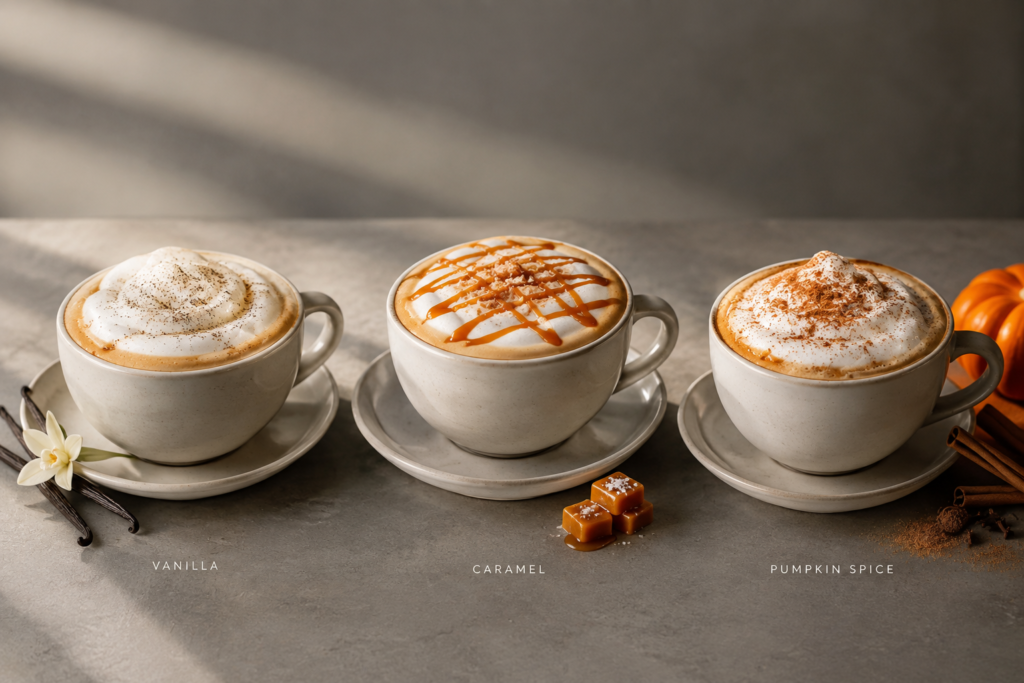
Vanilla and caramel are what we reach for most. Neither one fights with the espresso, take our French Vanilla Cappuccino, for example: it’s warm, a little mellow. It feels more like dessert than something you’d drink to wake up.
Caramel goes a different direction. In the Caramel Cappuccino, that slightly burnt sweetness actually holds up against a darker roast rather than getting lost in it.
Then fall shows up and everything changes. We start making the Pumpkin Spice Cappuccino, mostly because we use real pumpkin puree, not just the spice blend alone. Small swap. Bigger difference than we expected, honestly.
How to Make a Cappuccino at Home
You need three things to make a cappuccino at home:
- A shot of espresso
- Steamed milk
- Stiff foam layered on top
What you will need:
- 1 shot of espresso, about 1 oz
- 4 to 5 oz cold whole milk
- An espresso machine with a steam wand, or a handheld frother
Steps:
- Pull your espresso straight into the cup you are drinking from
- Pour cold milk into your steaming pitcher, filled about a third full
- Steam until the volume roughly doubles
- Tap the pitcher to pop any large bubbles
- Pour the milk over the espresso, holding back the thickest foam until the end with a spoon
The first few times, our foam never built up at all. Now we use cold milk straight from the fridge, since it gives the steam wand more time to work air in before the milk gets too hot.
Hot vs Iced Cappuccino
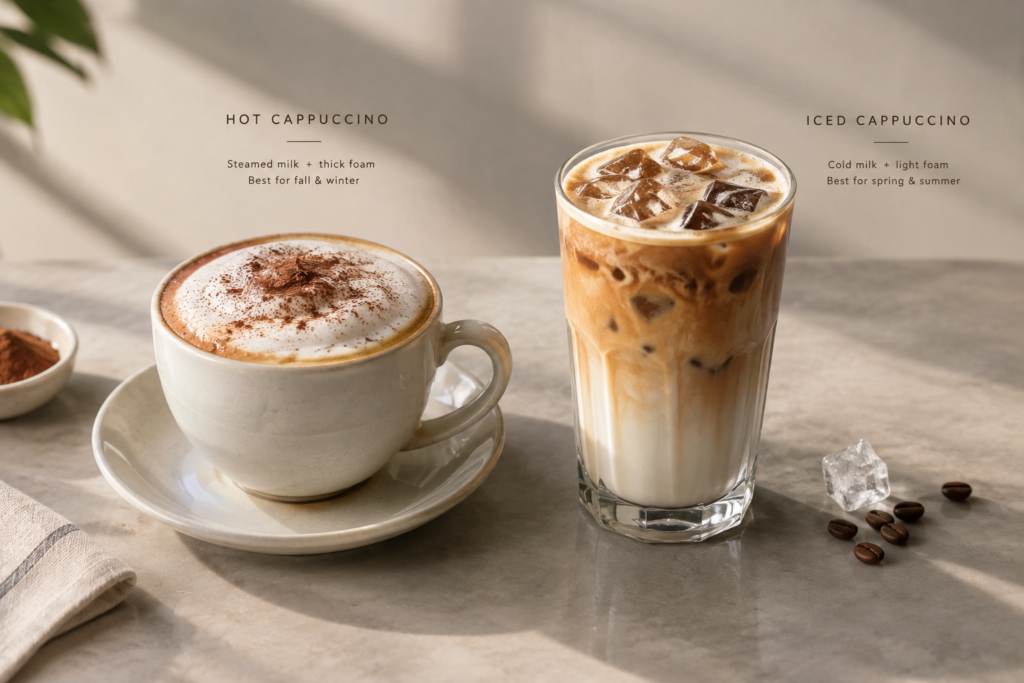
A hot cappuccino gets its texture from steamed milk and real foam. An iced one uses cold milk shaken or blended with ice instead:
| Factor | Hot Cappuccino | Iced Cappuccino |
|---|---|---|
| Milk | Steamed | Cold, shaken or poured over ice |
| Foam | Thick, stable | Thin, settles fast |
| Best season | Fall, winter | Spring, summer |
Going the iced route, pull your espresso a bit stronger than usual. Melting ice waters things down faster than you’d expect. We almost always throw in a splash more coffee than feels necessary at first.
Is Cappuccino Healthy?
On its own, a plain cappuccino isn’t a heavy drink. It’s somewhere between 70-150 calories based on the cup size and the milk you use:
| Nutrient (6 oz, whole milk) | Amount |
|---|---|
| Calories | About 80 |
| Protein | 4 to 5 g |
| Total fat | 3-4 g |
| Carbohydrates | ~7 g |
| Sugar from milk | 6 g |
| Caffeine | 63-77 mg |
That protein and calcium is coming straight from the milk, more than you’d get out of a plain black coffee. Switch to skim and you cut back on fat and calories, sure, but you lose some of that stable, thick foam along the way too.
Which Is Better, Americano or Cappuccino?
It comes down to one thing: black or creamy, whatever mood you’re in.
- An Americano is just espresso stretched out with hot water, nothing else
- A cappuccino brings milk and foam into the picture instead
If you want something with more depth, closer to a strong drip coffee, the Americano’s your drink. Prefer the milk to take some of the edge off that espresso? That’s cappuccino territory. On lazy mornings, we’re almost always pouring an Americano. The cappuccino comes out when we actually want something that feels more indulgent.
Final Thoughts
A cappuccino doesn’t need a long list of ingredients:
- Shot of espresso
- Warm milk
- A decent layer of foam
If you’re making it at home, then don’t worry about getting everything perfect on your first attempt. Try the classic version, experiment with flavors. Some mornings ask for a strong espresso flavor. While others ask for a creamy vanilla, caramel cappuccino. The best part is finding the version you enjoy.
FAQs
What are the four types of coffee?
Most menus really just build around four drinks, espresso, Americano, cappuccino, latte. Everything else is some variation of these, split apart by how much espresso, milk, and water goes in.
Is a cappuccino stronger than coffee?
A single-shot cappuccino has more caffeine than a large drip coffee. Even the espresso itself tastes bolder yet more concentrated. Opt for a double shot and it usually pulls ahead.
Is cappuccino healthy?
It is based on the milk and cup size. It may provide around 70–150 calories, with protein, calcium. The calories go up when you add sugar with flavored syrups, whipped cream.
What is in a cappuccino vs latte?
Both drinks start with espresso and milk. A cappuccino contains a lot more foam and a fairly even balance of espresso, steamed milk, foam. A latte contains more steamed milk along with just a thin layer of foam on top.